
Google Veo 4: What We Might See From Google's Next AI Video Model
What could Google Veo 4 bring to AI video generation? Longer clips, native 4K, personalized avatars, and advanced camera control are all possibilities. Here's what the landscape looks like — and the best AI video models you can use right now.

I counted the tabs I had open last Tuesday. Seven. Three for AI video tools I was testing, two for spec sheets, one for billing, and one sitting on a stale Google alert for “Veo 4 release date.”That last tab is the reason for this article.
I’ve been running AI video in production workflows long enough to care less about launch hype and more about accepted-clip rate, generation speed, and whether a model survives real deadlines. So when people start speculating about Veo 4, my question isn’t “Is it impressive?” It’s: what actually changes for creators generating dozens of clips every week?
Google hasn’t officially announced Veo 4 yet. But between Veo 3.1’s current limits and the models already shipping today, there’s enough to talk about: what Veo 4 could improve, what problems still matter, and which AI video models are already ahead in key areas.
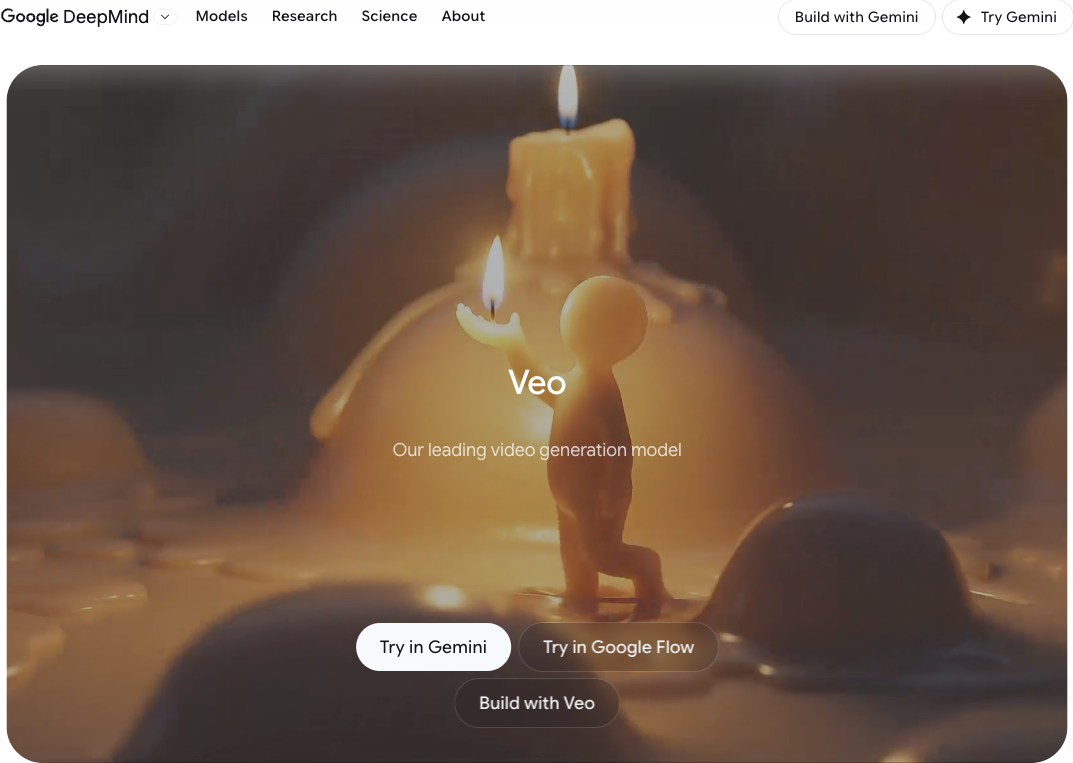
Google Veo 4: What Could Google’s Next AI Video Model Look Like?
As of May 19, 2026 — the opening day of Google I/O — there is no official Veo 4 model card, no Vertex AI model ID, and no Gemini API pricing entry anywhere on Google’s domains. Google has not confirmed Veo 4 exists. If you see a site claiming otherwise without linking to an official Google announcement, treat it as unverified.
What we do have is a release pattern. If you’ve been watching the Veo release cadence, the direction is clear: Google has shipped a new Veo version roughly every five to seven months since the original launch in May 2024. Veo 3 arrived at Google I/O 2025. Veo 3.1 followed in October 2025. That puts the next major version somewhere in the 2026 window — and Google I/O is historically where flagship model announcements happen. Community prediction markets cited in industry coverage have placed roughly 70% odds on a Veo 4 reveal at this event. That’s a probability, not a confirmation.
Everything in the next section is informed speculation. I’ve labeled it that way.
What Veo 4 Could Bring to the Table
These are reasonable expectations based on Veo 3.1’s documented limitations, Google DeepMind’s published research direction, and competitive benchmarks from models already shipping. None of this is confirmed. Treat each point as “plausible if Google addresses the obvious gaps” — not as a feature list.
Longer Video Duration
Veo 3.1 officially generates clips up to 8 seconds, as documented on Google DeepMind’s Veo page. For narrative content, that’s a hard constraint. A 30-second product ad requires stitching four or five separate generations and managing continuity between them — which is exactly the kind of friction a next-generation model should reduce.
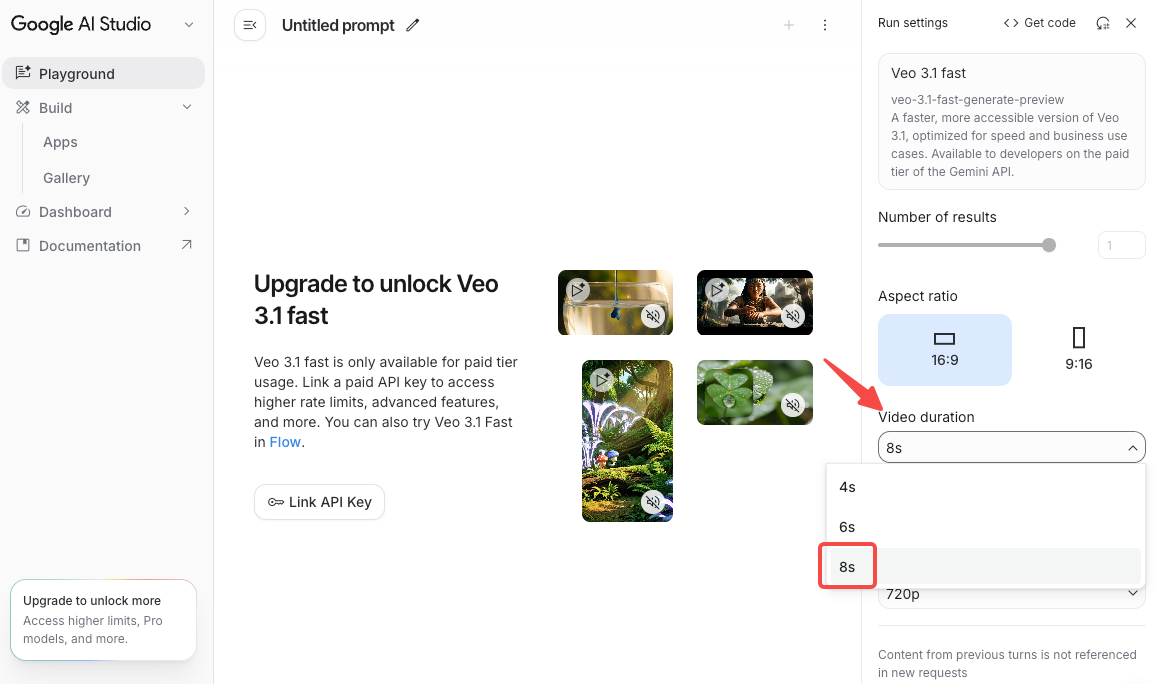
What a longer duration might look like in practice: I’d run the same prompt at 8s, 16s, and 30s, then check whether physics consistency and character identity hold across the full length. If drift appears before 20 seconds, the feature isn’t production-ready regardless of what the spec sheet says.
Native 4K Resolution
Veo 3.1 outputs at up to 1080p, per Google’s official documentation. Kling 3.0 — released by Kuaishou in February 2026 — already ships native 4K at 3840×2160, as confirmed in Kuaishou’s official press release. That competitive gap is the clearest signal of where Google needs to move.
Native 4K matters specifically for broadcast output and premium brand campaigns — not for social content, where 1080p is more than sufficient. Worth being honest about the actual use case before treating this as a universal upgrade.
Personalized Character Consistency
This is Veo 3.1’s most documented limitation in real workflows. Visual drift — facial features, clothing details, or hair shifting between shots — is the reason most teams currently treat AI video as a pre-viz tool rather than a deliverable. A reference-image anchoring system, where you supply photos of a character and the model maintains that identity across shots, would directly address this. Google’s own research on identity consistency in generative models suggests this is an active development area, though no product-level feature has been announced.
Advanced Camera Controls
Veo 3.1 accepts natural language camera instructions, but execution consistency is variable — “tracking shot” and “rack focus” produce different quality results depending on scene complexity. Explicit, parameterized camera control (shot type, movement speed, transition type) would make prompt engineering more reliable. This is where I’d immediately run a reproducibility test: same camera instruction, ten generations, check variance.
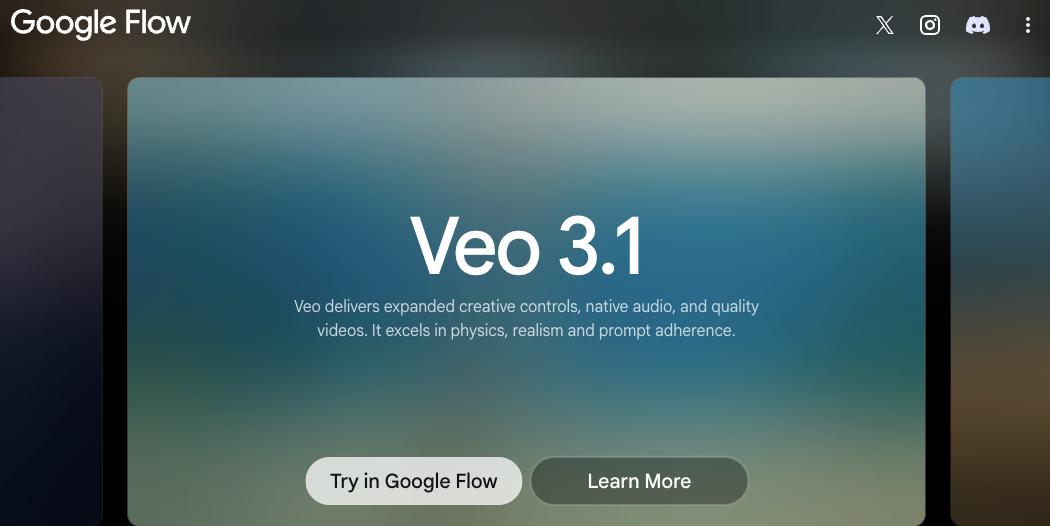
Could It Surpass Seedance 2.0?
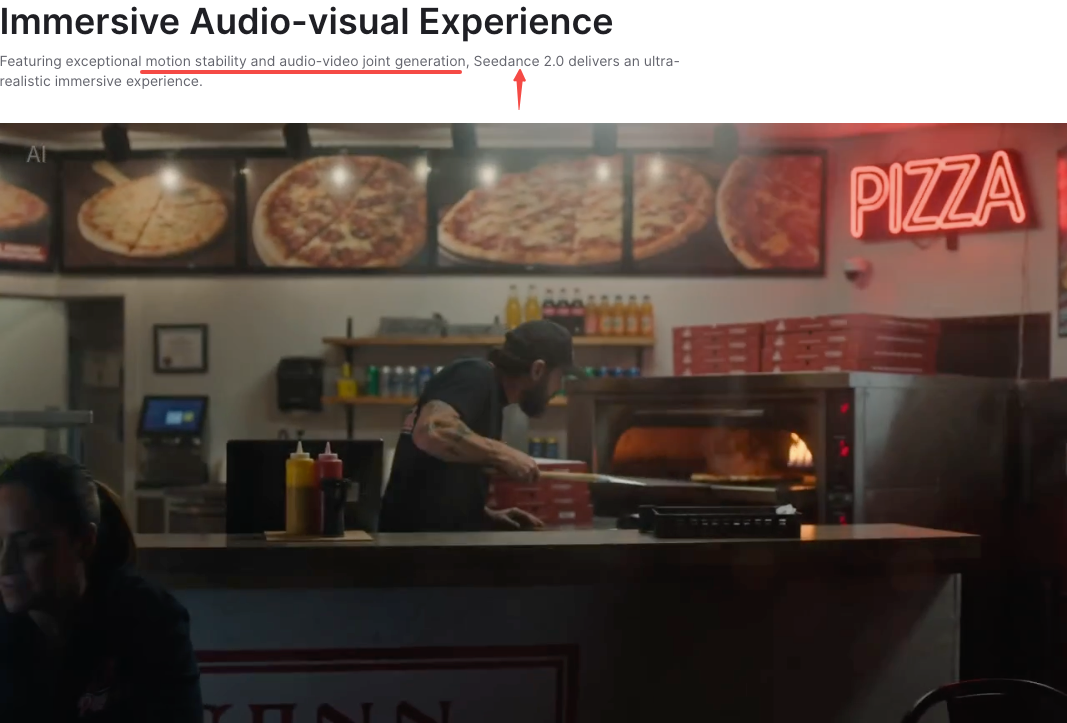
Unclear, and I’d rather not guess. Seedance 2.0 is the current benchmark on motion quality and physical plausibility, in my testing. Google’s consistent advantage has been in audio integration — synchronized dialogue, ambient sound, and music in a single pass — not raw motion physics. If Veo 4 holds that audio lead and closes the motion gap, it becomes a serious production tool. If it doesn’t close the motion gap, it remains a strong audio-first option.
I’ll run both on the same prompt set when Veo 4 is accessible. Until then: unresolved.
You Don’t Have to Wait: The Best AI Video Models Available Right Now
Google Veo 4 has no confirmed release date. The models below are shipping today, with publicly documented specs and verified pricing as of May 2026. All are accessible through WaveSpeedAI’s unified API — noted here because that’s the platform I’ve been testing on, and it’s relevant to disclose.
Google Veo 3.1 — The Current Best From Google
Documented specs: up to 1080p, 8-second clips, synchronized audio in a single pass, available via Gemini API and Vertex AI. Veo 3.1 Lite launched in April 2026 at under 50% of Veo 3.1 Fast’s cost, same generation speed — the relevant tier if you’re running volume. Drift shows up in shots with fast lateral movement; audio quality is the strongest I’ve tested in this class.
Alibaba Wan 2.6 — The Most Complete Video AI Ecosystem
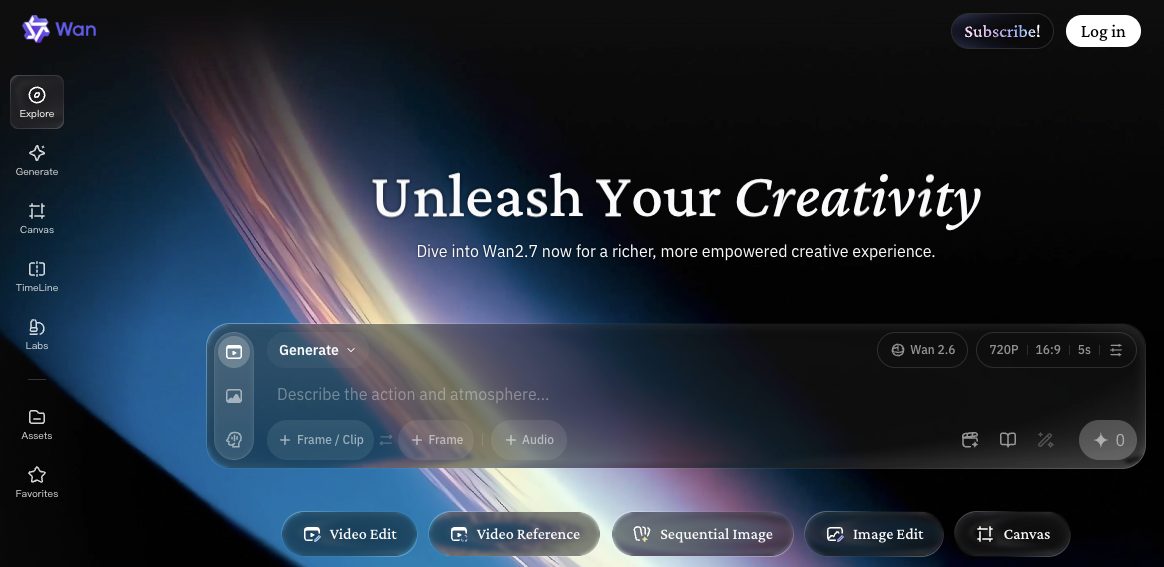
Documented specs per Alibaba’s December 2025 release announcement: up to 15-second clips at 1080p, 24fps, explicit multi-shot mode with “single” or “multi” shot type parameter. The script-based shot control is what makes it predictable — I can specify narrative structure and get repeatable results. Generation time: approximately 20 seconds per clip in my tests. Pricing varies by resolution tier; disable audio at 720p to reduce cost on high-volume runs.
Kuaishou Kling O3 Pro — Cinematic Quality With Audio
Launched February 2026, per Kuaishou’s official announcement. Uses MVL (Multi-modal Visual Language) technology for physics-aware motion — fabric, fire, water, and hair movement are the most physically plausible I’ve seen in this generation of models. Supports 3–15 second clips, start-and-end-frame control, and native audio generation. The frame control is the feature I reach for most: define the opening and closing frame, and the model handles the transition. Pricing: up to $0.392 per second at the Pro tier with voice control, per publicly available rate cards.
ByteDance Seedance 1.5 Pro — The Motion King
Purpose-built for audio-visual synchronization. Documented specs: 4–12 second clips in 1-second increments, multilingual lip-sync, $0.26 per 5 seconds at 720p with audio (as of May 2026 — verify current pricing before production commits). Motion quality on human subjects is the highest I’ve tested at this price point. The trade-off: shorter maximum duration than Wan 2.6 or Vidu Q3, and no background music generation.
Vidu Q3 — Quality Meets Flexibility
1080p output, 1–16 second clips, adjustable motion intensity, native background music generation — at $0.07–0.16 per second as documented in publicly available pricing. Smart Cuts handles multi-shot transitions without manual sequencing, which I’ve found useful for product showcase content. Higher per-second cost than Seedance at the 720p tier, justified by the resolution and duration ceiling.
The Landscape: AI Video Generation in 2026
The AI video generation landscape in 2026 has a structure worth understanding before you pick a model. No single model leads on every dimension. Seedance leads on motion physics. Kling leads on cinematic frame control. Wan 2.6 leads on narrative multi-shot at competitive pricing. Veo 3.1 leads on audio integration. Vidu Q3 offers the best duration-to-cost ratio in its tier.
The friction I keep running into isn’t quality — it’s that each model has different parameter logic, different billing units, different input formats. Managing that across five platforms is coordination overhead that compounds at scale. A unified API layer reduces that overhead, which is why I test on one platform rather than five separate dashboards.
When Veo 4 arrives, I’ll run the same evaluation: same prompt set across all available models, same resolution tier, documented generation time and cost per accepted clip. That’s the only way to compare fairly.
FAQ
When will Google Veo 4 be released?
No confirmed date as of May 19, 2026. Google has not officially announced Veo 4. Based on historical release cadence — roughly every five to seven months — and the timing of Google I/O 2026, a reveal this week is plausible but unconfirmed.
Will Veo 4 be better than Seedance 2.0?
Unknown until both are testable on the same prompt set. Seedance 2.0 currently leads on motion quality in my testing. Google’s documented strength is audio integration. Whether Veo 4 closes the motion gap is the key question.
Can I use Veo 3.1 right now?
Yes. Free access via Google Vids. Developer access via Gemini API and Vertex AI — see Google’s official Veo documentation for current pricing and endpoints.
What’s the best AI video model available today?
Depends on the task. Dialogue and lip-sync: Seedance 1.5 Pro. Cinematic motion with frame control: Kling O3 Pro. Multi-shot narrative at volume: Wan 2.6. Duration and flexibility balance: Vidu Q3. Audio-first with Google ecosystem: Veo 3.1. No single answer.
Will WaveSpeedAI support Veo 4 when it launches?
The platform adds new models as APIs become publicly available. No pre-announcement on Veo 4 specifically — check the model library when Google makes an official release.
Don’t Wait for the Future — Build With the Best of Today
The next model always comes with new constraints. Google Veo 4 will be impressive on some dimensions and limited on others — that’s been true of every generation so far.
The more durable move is building a workflow that can swap models without rebuilding from scratch: consistent prompt structure, model-agnostic parameters where possible, a documented eval set you can rerun on any new model in an afternoon. When Veo 4 ships, run your eval set, check the accepted-clip rate against your current baseline, and decide whether to migrate based on actual output — not the announcement.
The models you need are already here. Run them.
Previous posts:
Related Articles

Grok Imagine Video 1.5: xAI's Image-to-Video Model With Native Audio
Vidu Q3 API: Eliminate Enterprise AI Video's Core Bottlenecks for Global Developers & B2B Teams
What Is NVIDIA Cosmos3-Nano? The 16B Omni World Model for Physical AI
Gemini Omni Flash vs Seedance 2.0 vs Kling 3.0: Best AI Video Model for Multimodal Creation
Kling 3.0 Omni Explained: Multi-Shot Storyboarding, Native Audio, and Where It Beats Veo